
CONGRATULATIONS! We Did It!
Together!
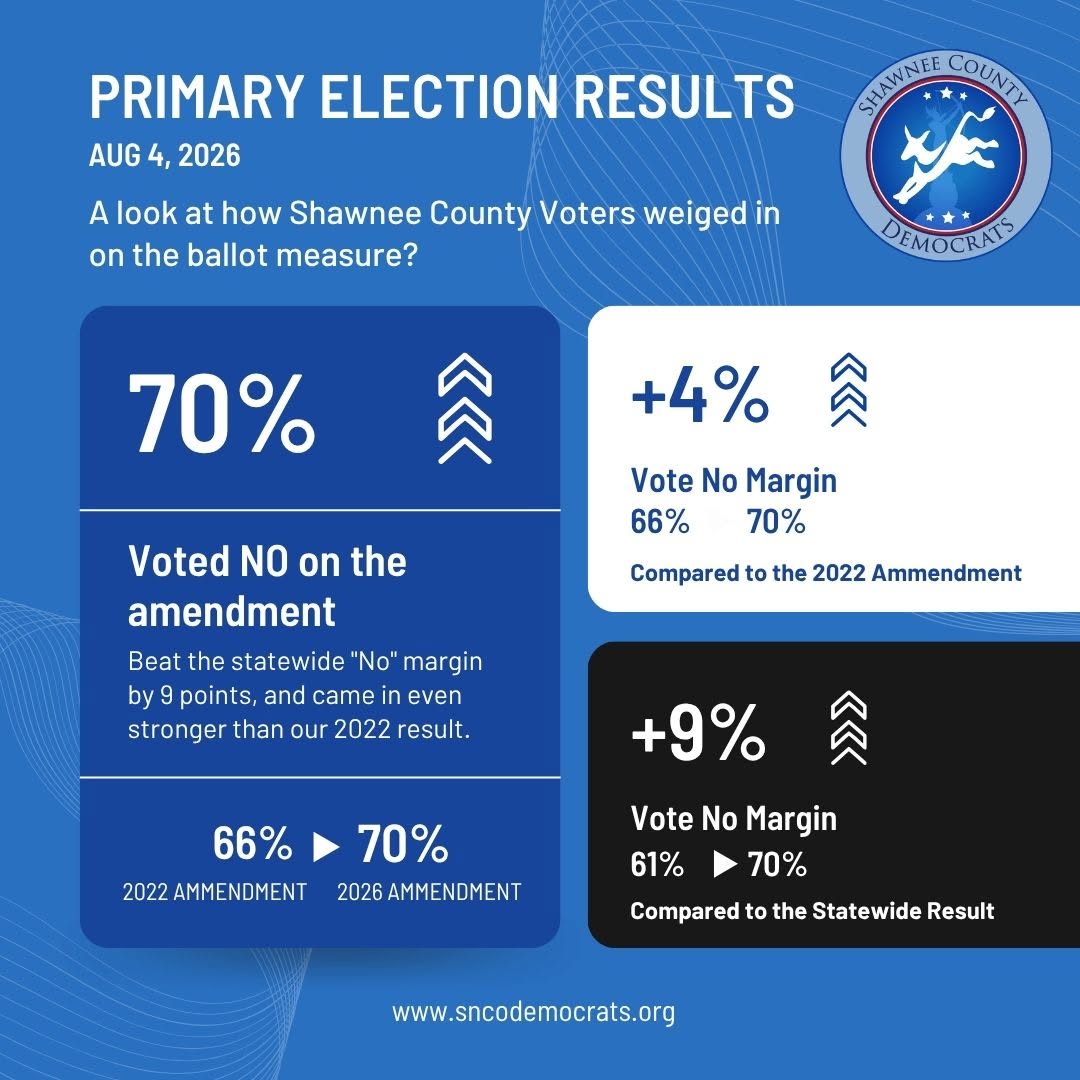
Kansas came together in a massive way, and once again… WE SAID NO!
It turns out that Kansans like and cherish the protections enshrined in our Kansas State Constitution, and we want to keep them! We have seen the partisan ways that big money and oligarchs have tried to purchase the Supreme Courts of other states, and we don’t want that here in Kansas!
Our Courts are NOT For Sale!
There was nothing “more democratic” about their openly-admitted motives to use new Justices to remove abortion protections from our State Constitution — rights that Kansans had already defended in 2022 in a similar No Vote, but the GOP-controlled Legislature apparently doesn’t know how to take NO for an answer. Gross.
So thank you, Kansas! Thank you for telling them, loudly and clearly, that
WE WILL NOT LET JUDGES BE TURNED INTO POLITICIANS!
Thank you also, regardless of your political affiliations, for recognizing that this is not a partisan issue, and partisan politics have no place in our Judicial Branch, where (in a perfect world) the law should apply to everyone equally, and turning Judges into Politicians creates more bias, and more conflicts of interest, not fewer.
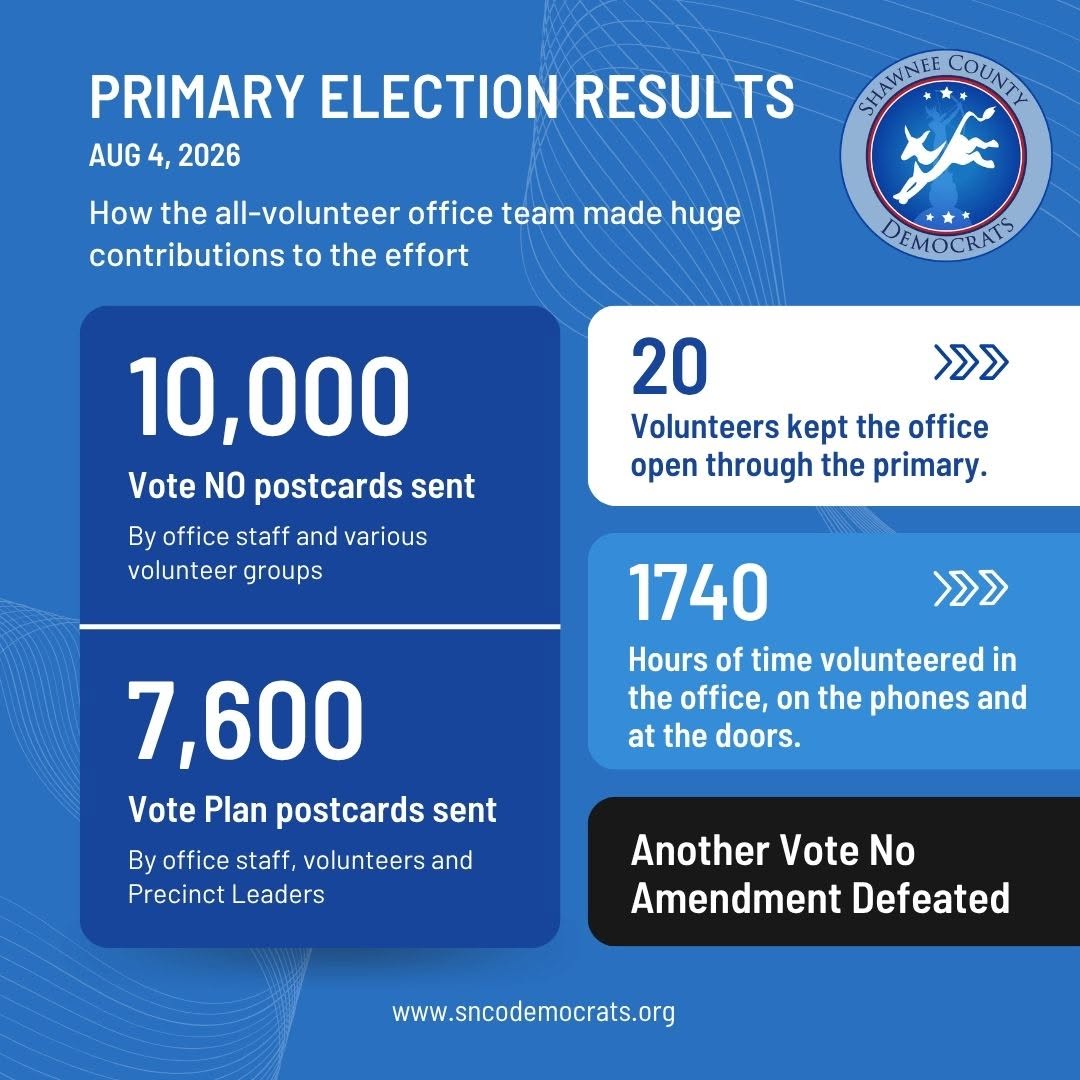
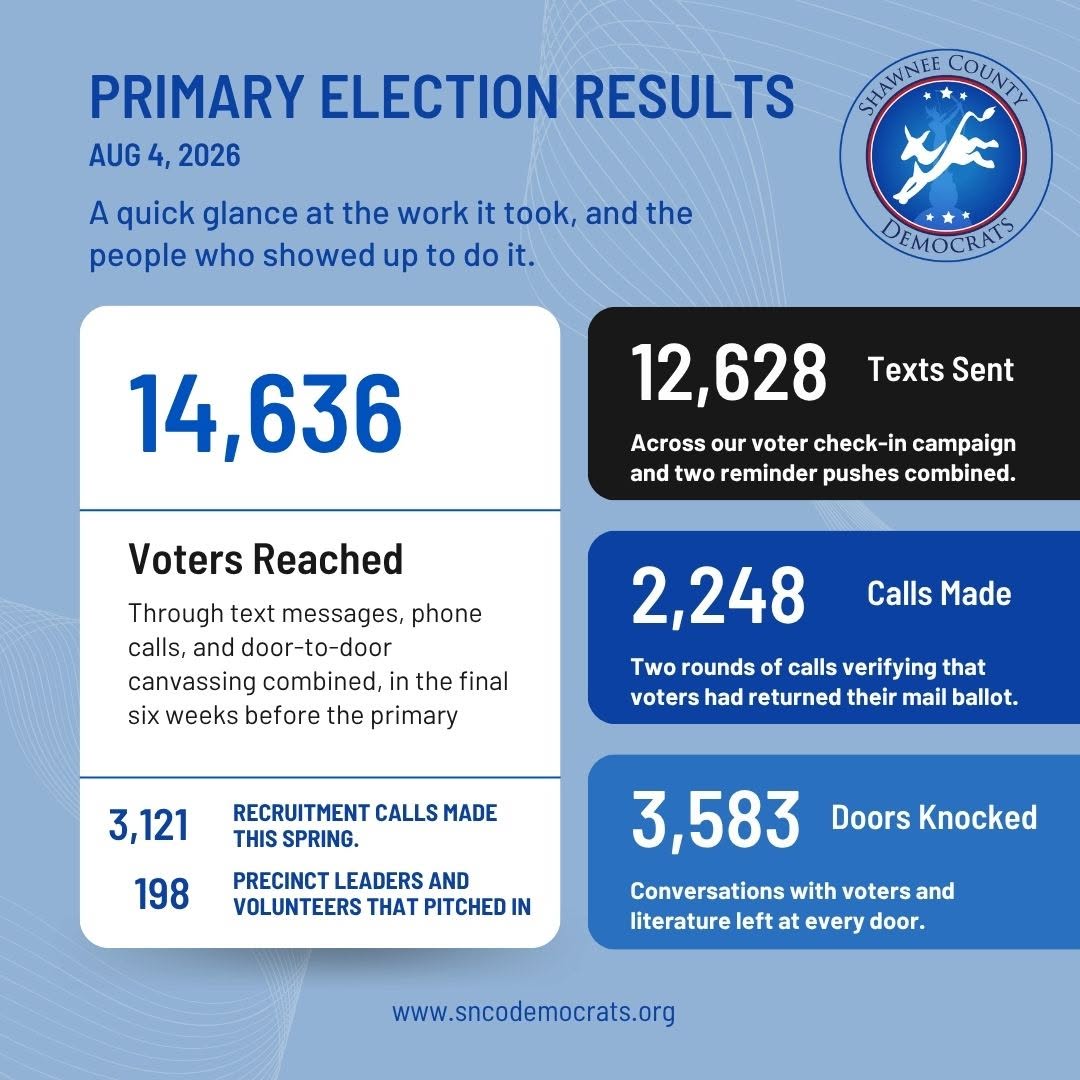
Our deepest gratitude to all of you who knocked doors, sent texts, mailed postcards, and had tough conversations with your friends. This Amendment was a must-defeat in protecting our Democracy. Thank you for getting out the vote.
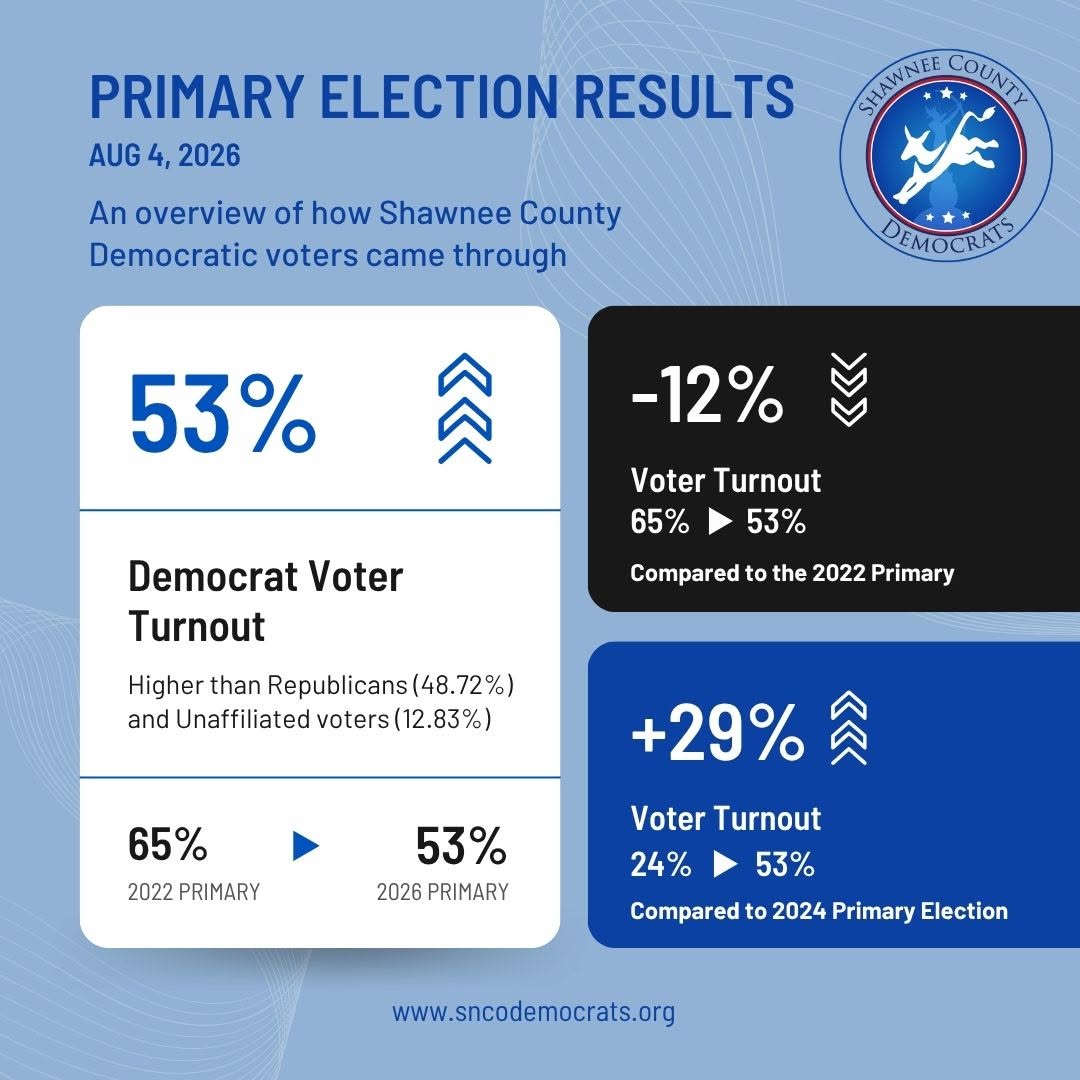
When Democrats Vote, Kansas Wins. Let’s do it again in November!
What *was* SCR 1611?
Senate Concurrent Resolution No. 1611 proposes amending the Kansas Constitution to change how Kansas Supreme Court justices are selected.
This amendment would dissolve the merit-based nominating commission, and allow justices to engage in political activities, as well as accept dark money for their campaigns, destroying their inpartiality and creating bias in a legal system that needs less of it, not more.
Set for a vote on August 4, 2026, the resolution offers a choice: keep the existing merit-based appointment process that has served Kansas well since 1958. Or hand our Supreme Court over to special interests, partisanship, and the influence of nation-wide dark money contributions that corrupt judges. We’ve seen these partisan motives play out in other states, and in our own state history, and we must prevent it from happening here ever again.
For more information, please visit the following links:
https://www.kansasappleseed.org/our-courts-are-not-for-sale/
Frequently Asked Questions:
Why should justices be appointed rather than elected?
The appointment process ensures justices are selected based on qualifications and experience, rather than political campaigns or special interests.
Doesn't election increase judicial accountability?
Appointed justices are accountable through rigorous review by a nominating commission, which prioritizes impartiality and competence over political pressures.
How does the appointment process prevent bias?
By focusing on merit, the appointment process reduces the risk of partisanship, allowing justices to rule based on law, not electoral considerations.
Is there transparency in the appointment process?
Yes, the process involves a nominating commission that openly reviews and vets candidates, ensuring qualified and fair-minded individuals are chosen.
What role does the governor play in appointments?
After the nominating commission reviews candidates, the governor makes the final appointment, ensuring a balance between expert evaluation and executive oversight.
How does merit selection protect against dark money?
Without campaigns, justices are shielded from the influence of campaign contributions and special interest spending, maintaining judicial independence.
Doesn't an elected judiciary reflect the will of the people?
The judicial system is about upholding the law impartially. Appointments ensure decisions are based on legal principles, not shifting public opinions.
Are there safeguards against corruption in appointments?
The multi-step nomination and vetting process involves checks and balances, reducing the risk of corruption and ensuring qualified appointments.
Can appointed justices be removed if necessary?
Yes, justices can be removed through established legal procedures if they fail to uphold their duties, maintaining accountability.
What if I disagree with a judge's ruling?
The legal system includes appeals processes to address disagreements, ensuring that rulings are based on law that can be objectively reviewed.
What is the impact of judicial elections in other states?
States with judicial elections often face issues of partisanship and outside influence, which can compromise judicial fairness and integrity.
What power do voters have if there are no elections?
Voters have the power to influence the judiciary through retention elections. After a year of service, judges face a retention vote, allowing citizens to decide if a judge should continue serving.
Don’t see your questions answered above? Want more details about an answer? We want to hear from you! Ask your question in this form, and we’ll add it to our FAQ.